If your child dreads the dentist, they are not alone. Many kids and teens experience deep fear about getting their teeth cleaned or their cavities filled. Some are even scared of just sitting in the dentist’s chair. As a parent, you want to reassure them, but sometimes comfort and reassurance aren’t enough to break through the fear.
One way to address this challenge is through hypnosis for kids. This therapeutic method can help them develop emotional tools for managing fear and staying calm throughout their dental visit.
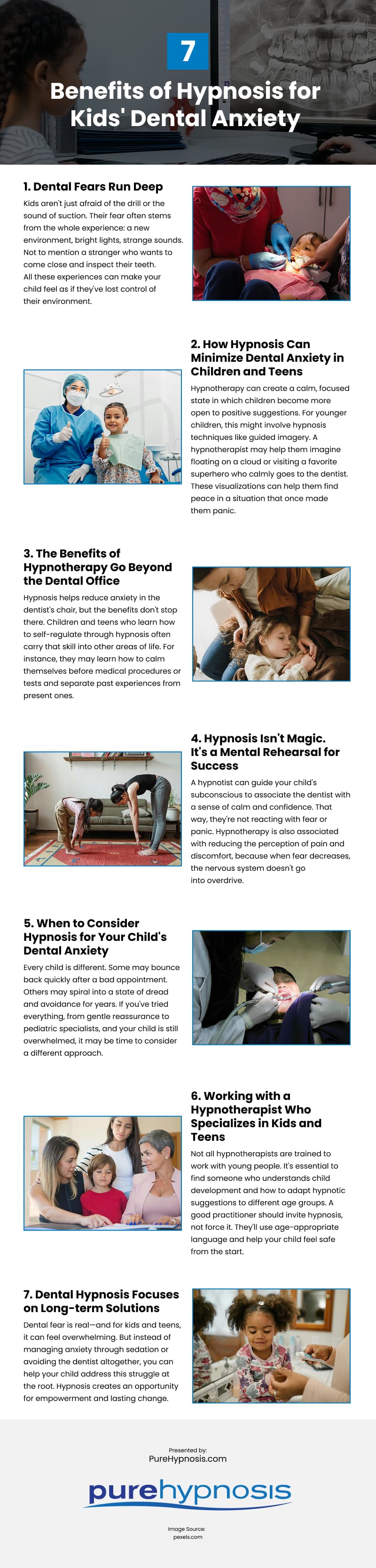
Dental Fears Run Deep
Kids aren’t just afraid of the drill or the sound of suction. Their fear often stems from the whole experience: a new environment, bright lights, strange sounds. Not to mention a stranger who wants to come close and inspect their teeth. All these experiences can make your child feel as if they’ve lost control of their environment.
Unfortunately, traditional reassurance sometimes backfires. Telling a scared child “it won’t hurt” doesn’t eliminate fear. It often reinforces the idea that something could go wrong. Even sedation or anesthesia won’t solve the problem in the long term. It masks the symptom without addressing the underlying emotional response.
Hypnosis treatment, on the other hand, works with the subconscious, which is the part of your child’s mind that stores memories, associations, and automatic reactions. That’s why hypnosis is often looked to as a catalyst for lasting change, one that can be more powerful than force or medication.
How Hypnosis Can Minimize Dental Anxiety in Children and Teens
Hypnotherapy can create a calm, focused state in which children become more open to positive suggestions. For younger children, this might involve hypnosis techniques like guided imagery. A hypnotherapist may help them imagine floating on a cloud or visiting a favorite superhero who calmly goes to the dentist. These visualizations can help them find peace in a situation that once made them panic.
For teens, a hypnotherapist may make a more direct approach. For instance, they may help your teen identify where their dental fear started or what beliefs they hold about the dentist. Then the hypnotherapist can use this information to reframe those thoughts into something empowering. Hypnosis can also reinforce a sense of autonomy. When teens feel like they’re participating in their experience—not being dragged into it—they respond differently.
The Benefits of Hypnotherapy Go Beyond the Dental Office
Hypnosis helps reduce anxiety in the dentist’s chair, but the benefits don’t stop there. Children and teens who learn how to self-regulate through hypnosis often carry that skill into other areas of life.
For instance, they may learn how to:
- Calm themselves before medical procedures or tests
- Separate past experiences from present ones
- Build confidence in their body and mind
- Feel a sense of control in unfamiliar environments
Such a life skill can help your child beyond their dental appointments by boosting their emotional resilience for years to come.
Hypnosis Isn’t Magic. It’s a Mental Rehearsal for Success
Many Olympic athletes use forms of hypnosis to prepare for competition. Actors use it to calm nerves before going on stage. Similarly, your child can use hypnosis to rewire their response to dental visits.
A hypnotist can guide your child’s subconscious to associate the dentist with a sense of calm and confidence. That way, they’re not reacting with fear or panic. Hypnotherapy is also associated with reducing the perception of pain and discomfort, because when fear decreases, the nervous system doesn’t go into overdrive.
When to Consider Hypnosis for Your Child’s Dental Anxiety
Every child is different. Some may bounce back quickly after a bad appointment. Others may spiral into a state of dread and avoidance for years. If you’ve tried everything, from gentle reassurance to pediatric specialists, and your child is still overwhelmed, it may be time to consider a different approach.
Hypnotherapy may be especially helpful if your child:
- Cries or shuts down before or during dental visits
- Avoids talking about dental appointments entirely
- Had a previous traumatic experience with a dentist
- Complains about stomach aches or headaches before visits
- Creates excuses to avoid a visit
- Refuses to open their mouth or follow instructions in the chair
You don’t have to wait until the next appointment goes badly. In fact, the best time to start hypnosis is before the visit. That way, your child will walk in already feeling grounded and capable.
Working with a Hypnotherapist Who Specializes in Kids and Teens
Not all hypnotherapists are trained to work with young people. It’s essential to find someone who understands child development and how to adapt hypnotic suggestions to different age groups.
A good practitioner should invite hypnosis, not force it. They’ll use age-appropriate language and help your child feel safe from the start. They may also involve you in the process, giving you tools to support the calming process at home.
With younger children, sessions may be shorter and more playful. With teens, sessions can address deeper thought patterns and beliefs. Either way, the goal remains the same: creating emotional safety that carries over into real-world settings.
Dental Hypnosis Focuses on Long-term Solutions
Dental fear is real—and for kids and teens, it can feel overwhelming. But instead of managing anxiety through sedation or avoiding the dentist altogether, you can help your child address this struggle at the root. Hypnosis creates an opportunity for empowerment and lasting change.
Imagine your child walking into the dentist with their shoulders relaxed and a quiet confidence in their eyes. That version of them is already inside. Hypnosis helps bring it forward.
Video
Infographic
Dental anxiety is common in children and teens, often triggered by unfamiliar environments, bright lights, and strange sounds. When reassurance isn’t enough, hypnosis provides a gentle and effective way to help them cope. Explore the benefits of hypnosis for children’s dental anxiety in this infographic.