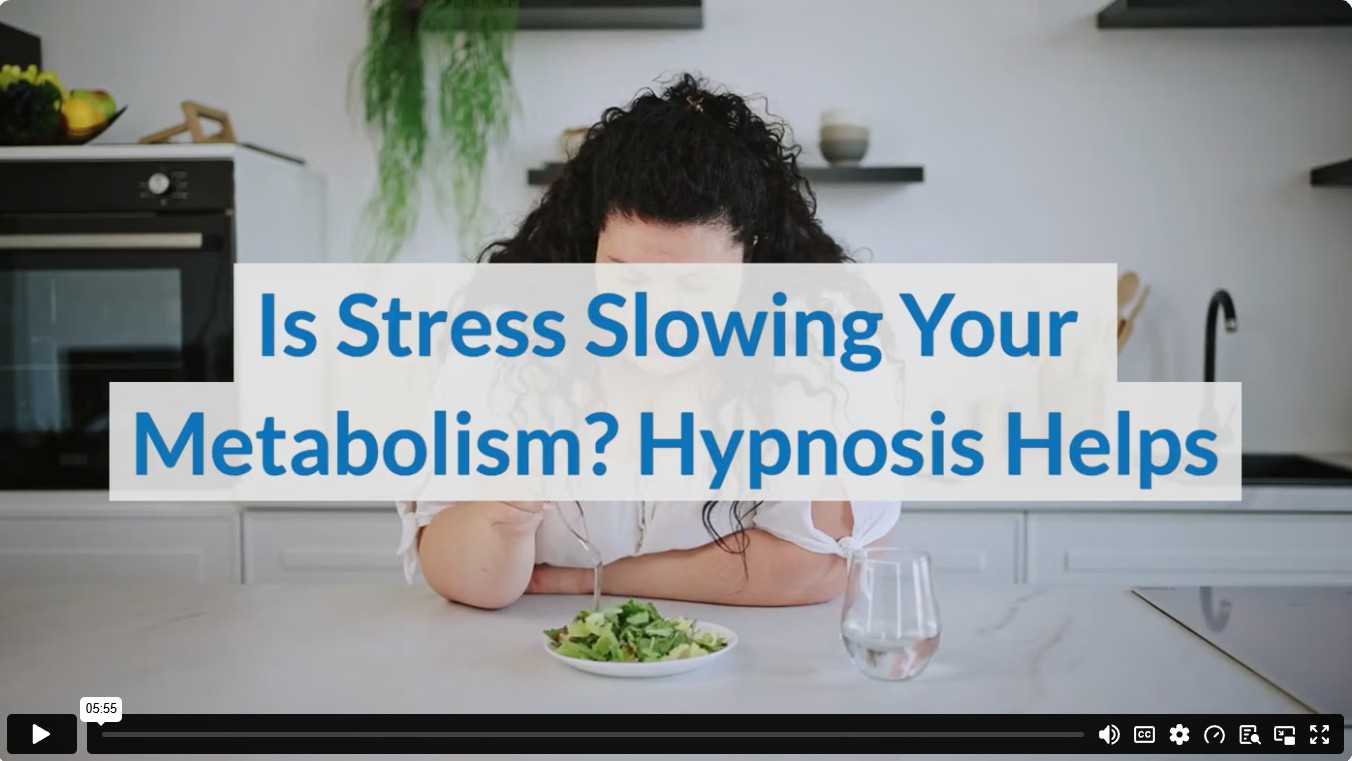
You’ve been trying to lose weight for years, but the scale just won’t budge. That experience is common, and it often comes down to one overlooked variable: stress.
This is why diet and exercise alone sometimes fail to produce results. When your nervous system remains in a heightened state of stress, weight loss becomes a physiological uphill climb. Hypnotherapy to lose weight is one way you can target this stress response at its subconscious root, which may give your body a chance to reset alongside your daily habits.
The Stress-Metabolism Connection
When you experience stress, your body releases cortisol, a hormone designed to prepare you for a threat. In short bursts, cortisol is useful. It sharpens focus and primes your body for action. The problem arises when stress becomes chronic. When the pressure doesn’t let up, your cortisol levels stay elevated.
High cortisol signals to your system that resources are scarce and danger is present. In response, your body tends to store fat, such as around the abdomen, as a survival mechanism. Cortisol also increases appetite and can drive cravings for high-calorie, high-sugar foods, anything that will give you a quick boost in energy. Elevated cortisol can also affect insulin sensitivity, making it harder for you to regulate blood sugar effectively.
Sleep is another casualty. Chronic stress disrupts your sleep cycle, and poor sleep creates its own downstream effects. For instance, it raises your hunger hormones, reduces the hormones that signal fullness, and drains the energy you need for physical activity. The result is a self-reinforcing cycle.
Why Effort Alone Often Falls Short
Conventional advice for weight loss focuses on two things you can control: what you eat and how much you move. That advice is reasonable, but it ignores the internal environment in which those behaviors occur.
When you’re under constant stress, your whole body is operating in a different mode than it is when you feel safe. Your metabolism, cravings, energy, and sleep are all shaped by signals your nervous system sends based on its current perceived threat level. You can override some of those signals through conscious effort, but your subconscious operates much faster and with far more influence than deliberate willpower.
How Hypnosis Addresses Stress at the Root
Because hypnosis works directly with your subconscious, it offers an alternate way to address chronic stress connected to weight loss. During a session, a hypnotherapist guides your mind into theta, a deeply relaxed, highly focused state between waking and sleep. In this state, your subconscious is more accessible, and your nervous system shifts out of its alert, reactive mode.
Your subconscious governs much of your stress response. Your nervous system can trigger a cortisol release before you’ve consciously registered a threat. Working at the subconscious level allows a hypnotist to help you reduce the sensitivity of that response, helping your mind and body more readily return to a balanced state rather than staying locked in stress mode.
Over time, this shift can help you have a less reactive nervous system. When you spend less time in high-alert mode, some of the physiological pressure toward fat storage and heightened cravings may ease. If you use hypnosis for chronic stress or weight loss, you may also experience changes like:
- Improved sleep quality
- Cravings that lose their urgency
- A weaker pull toward emotional eating
Sleep improvements, in particular, can create a compounding effect. By getting better sleep, you can improve your decision-making, which may increase your resistance to the cravings that poor sleep amplifies.
Using Hypnosis Techniques to Work Through Resistance
One of the most frustrating parts of trying to change health behaviors is internal resistance. You know what you want to do. Part of you is ready to do it. Another part simply doesn’t want to follow through. Hypnotherapy practitioners recognize this dynamic well. It’s a conflict between your conscious intention and a subconscious pattern.
Neuro-linguistic programming (NLP), a hypnosis technique, examines the connections between your thoughts, language, and behavior patterns. Your hypnotherapist may incorporate NLP techniques into your session to address the conflict between your chronic stress and weight management.
Parts Integration
Hypnotherapists use parts integration to resolve your internal tension around a behavior, helping the part of you that wants to eat well and the part that reaches for comfort food. It helps you reach a resolution rather than continuing a game of tug-of-war.
For instance, perhaps the part of you that’s drawn to late-night snacking is seeking comfort or a break from stress, rather than the food itself. Your hypnotherapist can use this NLP technique to help both parts recognize they share the same underlying intention.
Anchoring
Anchoring is another useful NLP technique. Through anchoring, your hypnotherapist can help you connect a calm, resourceful mental state to a specific gesture or sensation. To set the anchor, such as pressing your thumb and forefinger together, your hypnotherapist will guide you fully into that calm state, then apply the gesture at its peak. That way, your nervous system links the action to the sensation.
Now that your subconscious has formed the link, repeating the same gesture on its own can help restore a sense of calm whenever you need it, such as before a meal or during a moment of high stress.
Weight Management From the Inside Out
If you’ve spent years struggling with your weight management, you may believe that you lack the discipline or willpower everyone else seems to have. The reality is that you may be struggling with chronic stress, a factor that shapes your metabolism, cravings, and energy in ways that have little to do with effort or intention.
A calmer nervous system can help change what’s possible for your body. When stress stops driving the show, your hormones have room to regulate themselves, your sleep patterns have room to recover, and your cravings may lose their urgency.
Hypnosis works with your subconscious to bring about calm, addressing the stress response at its starting point rather than asking you to override it with willpower alone. Over time, this shift may help your subconscious and your body to move in the same direction rather than pull against each other.
Video