Most people who struggle with addiction have tried to stop, sometimes many times. They know the damage the habit is causing and want something different for themselves. And for a stretch of time, they hold on through determination.
Then a moment of stress arrives, or an old feeling surfaces, or a familiar place brings back a craving they thought they had outrun. And the cycle begins again.
This isn’t a failure of willpower. It’s a sign that the part of the mind driving the behavior hasn’t changed.
If you struggle with drug dependency, hypnosis for drug addiction may be something you should consider. It focuses on the subconscious patterns behind a craving rather than forcing you to override it through effort alone.
What Drives Addictive Behavior
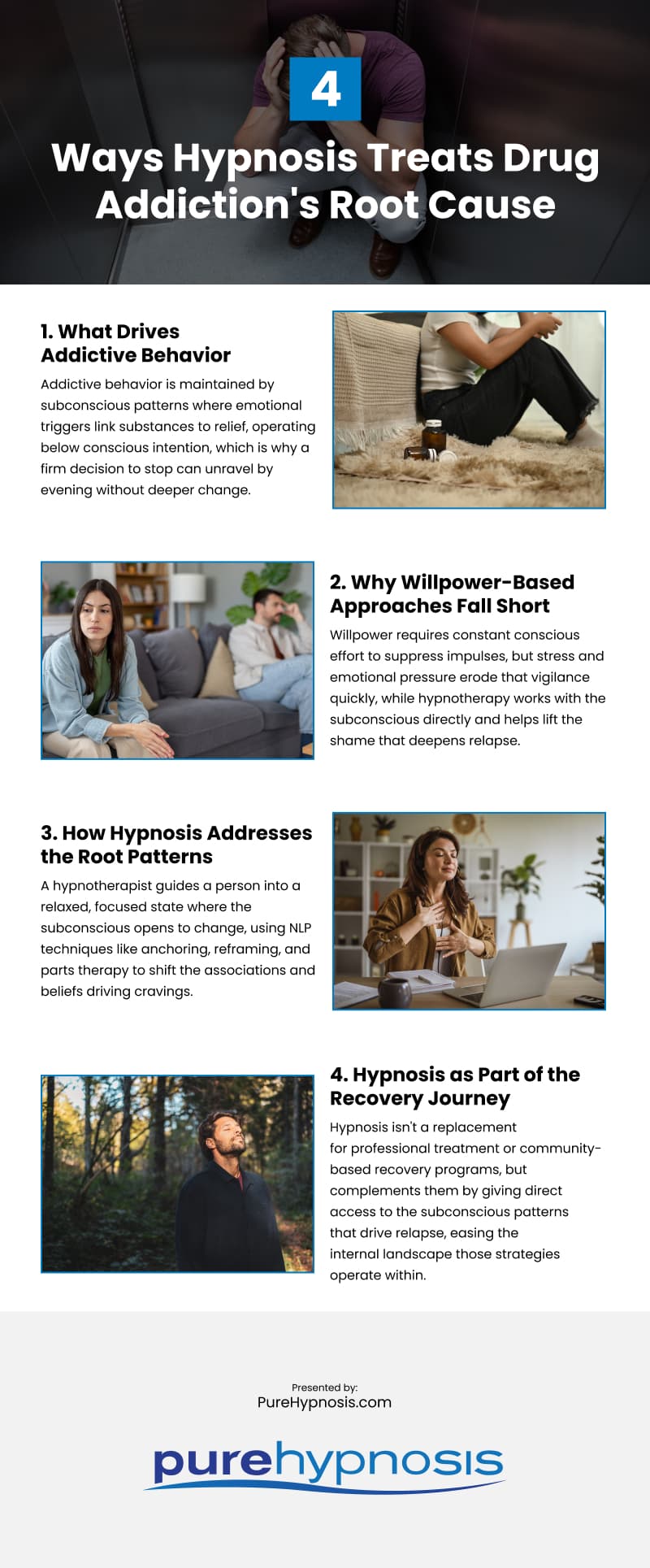
At the subconscious level, addictive behavior is maintained by a set of interlocking patterns. Emotional triggers link the substance to relief, and, though you try to change that association, deeply ingrained beliefs keep you from breaking the cycle.
These patterns don’t operate in your conscious mind, which is where intentions and decisions live. They operate below that, in the automatic, reflexive part of your mental architecture that responds before you have time to think. This is why you can make a firm decision to stop in the morning and find yourself in a very different place by evening. Your conscious intention exists, but the subconscious pattern hasn’t changed.
Understanding addiction this way shapes what meaningful recovery work might look like for you. Addressing the behavior at the surface level, without touching the subconscious structure beneath, leads to the cycle of stopping and starting. The pattern remains in place, waiting for the right conditions to reassert itself. Any approach aimed at creating lasting change in your life has to go deeper than behavior management.
Why Willpower-Based Approaches Fall Short
Willpower works by suppressing the impulse to use. It requires conscious effort, ongoing vigilance, and a mental environment that stays manageable. The problem is that stress, difficult emotions, and environmental cues can quickly erode that vigilance.
When you’re in early recovery and encounter a high-pressure moment, your brain reaches for its most familiar coping mechanism. Years of association between stress and the substance have made that connection automatic. Willpower asks you to repeatedly override an automatic response with a conscious one under conditions of emotional pressure. That’s a difficult and exhausting position to hold long-term.
When you work with the subconscious mind, you can change things so you aren’t depending on sheer willpower. Instead of focusing on behaviors, you can focus on what lies at the heart of your addiction. As a result, you can produce more durable results.
Hypnotherapy also helps lift the shame that surrounds relapse. When you believe you’ve failed because you lack the discipline to stay the course, you deepen the shame-filled story you tell yourself. That story lives in your subconscious, and it makes the next attempt to quit harder. Hypnotherapy services address that flawed story directly so you can stop believing the problem is a character flaw.
How Hypnosis Addresses the Root Patterns
A hypnotherapist uses hypnosis to guide you into a state of deep focus. In this relaxed but aware condition, your subconscious mind opens to change. Here, a trained hypnotherapist can work directly with the patterns and associations that maintain the addictive behavior.
Neuro-linguistic programming (NLP) techniques extend this work further. NLP examines the internal structure of how you think, including the mental images you picture and the words you hear in your mind. By working with this structure, a skilled hypnotherapist can change the associations that drive your craving and reframe the beliefs sustaining your substance use. A hypnotherapist may draw on NLP techniques like these as part of the work:
Anchoring
With anchoring, a hypnotist helps you associate a specific physical cue, like tapping your fingers, with a feeling of calm or control. This creates an anchor you can use later.
For example, if you regularly experience cravings during your stressful commute, you perform your physical cue and tap your fingers on the steering wheel. This gives your mind something to focus on besides the substance.
Reframing
A hypnotherapist can change the meaning you’ve attached to a trigger or a past experience. For example, if you experience a craving every time you have a difference of opinion or argument with someone, your hypnotherapist can help you see those situations differently. They can help you understand that these differences are a necessary part of life that you can work through constructively, not something overwhelming that requires an escape.
Parts Therapy
With parts therapy, a hypnotherapist can help you address the internal conflict between the part of you that wants to stop and the part that still reaches for the substance under stress.
For example, one part of you might feel proud for staying clean after a difficult week, while another part starts looking for an excuse to use the moment you have a bad day. A hypnotist can use this technique to resolve that conflict directly, rather than asking one part to simply overpower the other.
Hypnosis as Part of the Recovery Journey
Hypnosis isn’t a replacement for professional addiction treatment, medical support, or community-based recovery programs. It works best as a complement to those efforts, adding something those approaches typically lack: direct access to the subconscious patterns that drive relapse.
While structured recovery programs build accountability and behavioral strategies, hypnotherapy works on the internal landscape within which those strategies operate. When that internal landscape changes, the work of staying on course can become less of a daily battle.
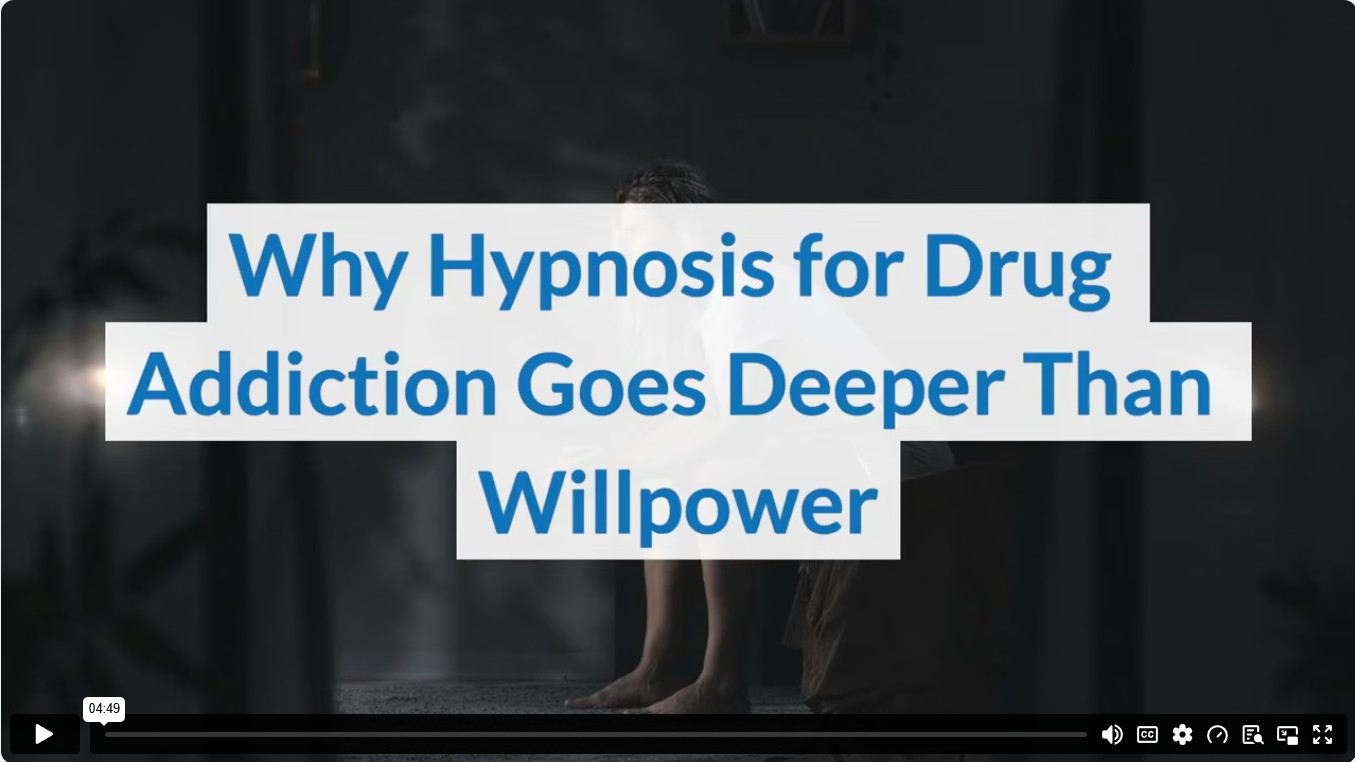
Video
Infographic