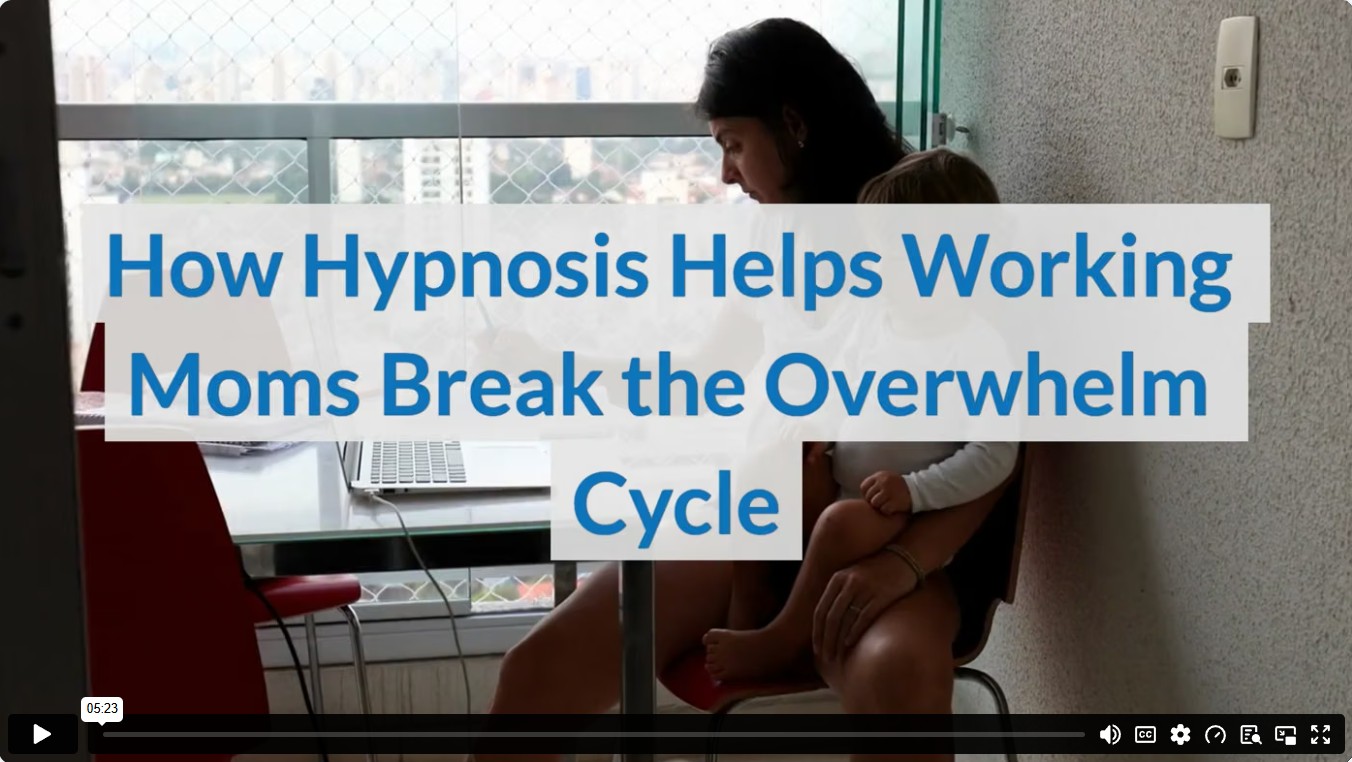
As a working mom, something is always competing for your attention. Work projects, endless piles of laundry, last-minute school projects, and your families’ emotional needs demand your energy all at once. It can feel like you’re constantly playing catch-up.
If you’re a busy mom searching for support that fits real life, hypnosis is one way you can address your feelings of overwhelm. With hypnosis available on weekends at some clinics, this is one way you can find time for yourself and tackle overwhelm at a subconscious level without rearranging your already packed weekday schedule.
Why the Overwhelm Cycle Is So Hard to Break
What makes overwhelm for working moms so difficult is that it doesn’t disappear when your to-do list gets shorter. A lighter week can still feel heavy when your mind is in a state of constant responsibility. Remember to throw dinner in the crockpot before you log in to your morning meeting. Don’t forget to submit that report before driving to soccer practice. It’s endless and exhausting.
Your brain gets accustomed to constantly operating in survival mode. The stress response that’s supposed to activate during emergencies starts running as a baseline. Soon, it becomes your new normal. Your body and mind stay busy, and relaxation feels like something you’ll eventually get to later.
This is the overwhelm cycle. You push through because stopping isn’t an option. And no amount of getting more organized, rest, or scheduling self-care breaks the underlying pattern.
How Hypnosis Goes Below the Surface
Most approaches to addressing overwhelm focus on behavior. Do less, delegate more, protect your boundaries. While these strategies can help, they don’t always address what’s happening underneath the surface.
For many working moms, overwhelm isn’t driven solely by a full schedule. It’s also fueled by recurring mental habits such as:
- Perfectionism
- Excessive self-pressure
- Difficulty accepting support
- Staying mentally engaged even when you have a chance to rest
Because your mind automatically follows these patterns, it’s difficult to change them through willpower alone.
Hypnosis therapy works directly with those underlying patterns. During a session, a hypnotherapist guides you into a deeply relaxed, focused trance between the alpha and theta states of brainwave activity. Your mind naturally passes through this state when you start to fall asleep.
In this state, your subconscious becomes more receptive to suggestion, creating an opportunity for a hypnotist to help you reshape automatic thought patterns, emotional responses, and learned habits that contribute to overwhelm.
How Hypnotists Interrupt the Overwhelm Cycle
Many hypnotherapists combine hypnosis with Neuro-linguistic Programming (NLP), a collection of hypnosis techniques that use mental images, internal dialogue, and emotional associations to reshape how you experience everyday situations.
Reframing
As a working mom, you likely carry invisible expectations about what you should be able to accomplish in a day. When your project runs late, you miss a school event, or the laundry piles up, it’s easy to interpret those moments as big personal failures rather than normal parts of a busy life.
Reframing is an NLP technique that changes the way your mind interprets a situation. During hypnosis, a hypnotherapist may help you view responsibilities, setbacks, and competing demands from a different perspective. Instead of automatically triggering self-criticism or guilt, those situations can begin to feel more balanced and proportionate to what is actually happening.
Anchoring
Overwhelm builds gradually. A stressful email, a packed calendar, and a few unexpected interruptions can leave you feeling mentally stretched before lunchtime.
Anchoring creates a connection between a calm mental state and a physical cue. During a session, a hypnotherapist can help you pair feelings of calm and focus with a simple action, such as gently pressing your thumb and index finger together. With practice, that cue can become a reminder of the calmer state experienced during hypnosis and a tool you can use when pressure starts to build throughout the day.
Parts Integration
Many working moms feel caught between competing priorities. One part of you wants to succeed professionally. Another wants to be fully present with your family. Another recognizes the need for rest, but struggles to make it a priority.
Parts Integration is an NLP technique that works with these internal conflicts. Rather than treating those competing priorities as a problem to solve, the process helps create greater alignment between them. The goal isn’t to choose one role over another. It’s to reduce the internal tension that can develop when multiple responsibilities constantly compete for your attention.
Together, these NLP techniques can help reduce some of the internal tension that contributes to overwhelm. As those patterns begin to shift, you may find it easier to carry the demands of daily life without the same level of mental strain.
Quieting the Mental Load
Being a working mom comes with real demands, and hypnosis won’t make those responsibilities disappear. The work emails, school events, and pile of dishes will still be there tomorrow. What hypnosis can help change, however, is the constant stream of mental checklists and pressure your mind has to endure to get through these tasks.
By working with the subconscious habits that contribute to overwhelm, hypnotherapy offers you an opportunity to approach your daily demands with greater perspective and flexibility. With less mental energy devoted to self-pressure, guilt, and constant vigilance, you can focus on what’s in front of you and be more present for the moments that matter most.
Video