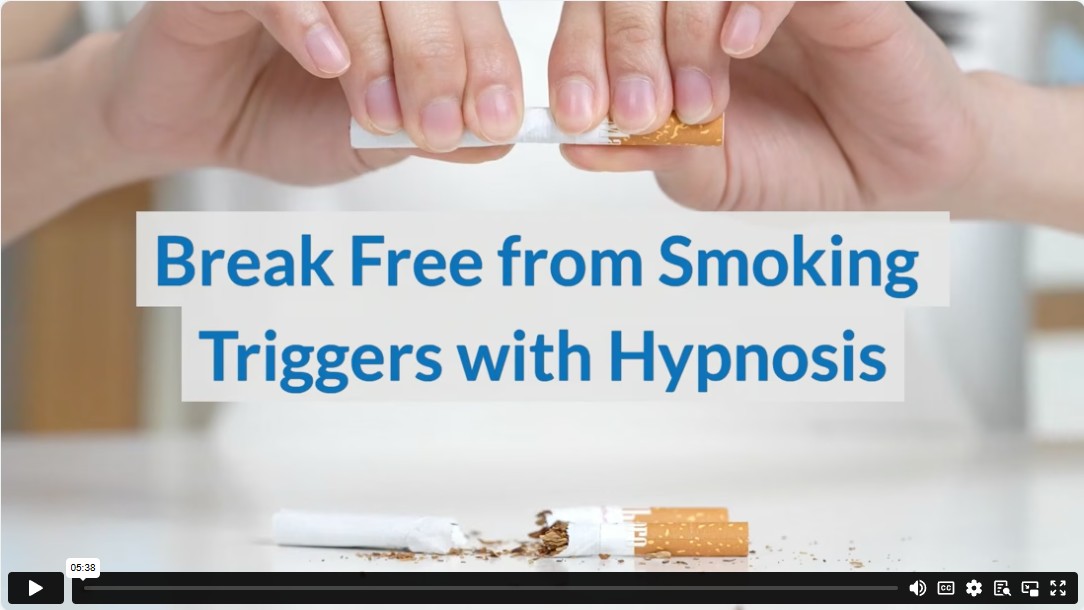
Quitting smoking is a huge accomplishment, but for many people, the hardest part isn’t the act of quitting itself. It’s dealing with the triggers that make you crave a cigarette. Whether it’s stress, a social situation, or simply feeling bored, these triggers can reignite the urge to smoke even when you’ve been doing well.
Some people address these triggers by using hypnosis to quit smoking. Hypnosis targets the subconscious patterns tied to your smoking triggers and can help you stay committed to a healthier, smoke-free life.
What Powers Smoking Triggers?
Think of the triggers for smoking as your mind’s automatic response to a situation. Over time, your brain has linked certain feelings or situations with smoking. So whenever you feel stressed, for instance, you might automatically reach for a cigarette. The challenge with quitting smoking isn’t just about resisting that urge; it’s about rewiring your brain to break those associations altogether.
For example, you might find that you crave a cigarette after a meal, or maybe you associate your morning coffee with smoking. These automatic responses are powerful and can feel almost impossible to control on your own. Hypnosis for smoking works by targeting the root cause of these cravings, changing the way your brain responds to those triggers at a subconscious level.
How Hypnosis Therapy Tackles Emotional Smoking Triggers
For many people, emotional triggers are the hardest part of quitting smoking. It’s not just about resisting a craving in the moment. It’s about changing the way your mind responds to the feelings that set those cravings off in the first place. In a deeply relaxed state, your subconscious becomes more open to positive suggestions, allowing hypnosis to target those underlying thought patterns directly rather than just easing surface discomfort.
Through guided hypnosis treatment, you can begin replacing automatic emotional responses with healthier ones. Rather than reaching for a cigarette when a difficult moment hits, you can develop new ways of processing those feelings, whether that’s focused breathing, a positive visualization, or simply meeting the situation with a calmer, steadier mindset. Over time, those new responses can become just as automatic as the old ones.
Which NLP Hypnosis Techniques Can Help With Smoking
Neuro-linguistic Programming (NLP) is an approach many hypnotherapists incorporate into smoking cessation sessions. It works by breaking down your thought process into three components: internal visuals, internal dialogue, and feelings. By working with these elements at a subconscious level, an NLP hypnotherapist can use techniques to help shift the patterns that keep you reaching for a cigarette. These NLP techniques might include:
Reframing
Reframing helps you reassess the thoughts and experiences you associate with smoking so they no longer carry the same pull. For example, if you’ve always thought of smoking as a way to relax, a hypnotherapist might help you reframe that belief so that smoking feels less like relief and more like something that works against the calm you’re actually looking for.
Parts Integration
Parts integration addresses any internal conflict you might have about quitting. If part of you wants to stop smoking but another part still associates it with comfort or reward, a hypnotherapist can work to bring those two sides into alignment so your thinking is pointed in the same direction.
The Swish Method
The Swish Method trains your brain to automatically replace mental images of smoking with something more aligned with your goal of being smoke-free. A hypnotherapist might guide you to picture yourself reaching for a cigarette, then instantly swap that image with a vivid picture of yourself feeling healthy and free from the habit.
Anchoring
Anchoring connects a positive state of mind to a specific action or gesture you can use when a trigger hits. For instance, a hypnotherapist might guide you to recall a moment when you felt completely calm and at peace, then anchor that feeling to something like pressing your thumb and forefinger together. Over time, that gesture becomes a reliable way to access that state in triggering moments.
Visualization
Visualization guides you to mentally rehearse how you will respond to specific triggers without reaching for a cigarette. If you’ve always smoked after meals, for example, a hypnotherapist might walk you through picturing yourself finishing a meal and then calmly moving on to something else entirely, such as going on a walk or watching a movie. By repeatedly rehearsing that response, your brain can build new patterns that support healthier behavior in real situations.
When used together, these NLP techniques can address your smoking triggers from multiple angles, supporting a more thorough shift in the way your mind responds to the urge to smoke.
How Hypnosis Outperforms Willpower Alone
Willpower plays a role in quitting smoking, but on its own, it often fails to break the cycle of cravings and triggers. Smoking is deeply ingrained in your brain’s automatic patterns, and fighting those urges through sheer mental force can be exhausting and unsustainable. Hypnosis takes a different approach by working with your subconscious mind to create change at a deeper level, making it easier to respond to triggers without the constant internal battle.
Rather than forcing yourself to resist every craving as it comes, hypnosis works to rewire the way your brain processes the desire to smoke in the first place. Over time, this can make quitting feel less like deprivation and more like a natural shift in the way you think and respond to smoking triggers. The goal isn’t just to manage cravings. It’s to reach a point where those triggers no longer have the same hold over you.
Take Control of Your Smoking Habit Today
If you’re ready to take control of your smoking triggers and break free from the cycle, hypnosis may be a solution. By addressing the root causes of your cravings, hypnosis can help you develop healthier responses to stress, boredom, and other triggers. With techniques like reframing, anchoring, and visualization, a hypnotherapist can help you rewire your brain and build the mental resilience needed to stay smoke-free.
Video